← All work
10/2025 · 2026Cubo Itaú

Cubo Itaú:from spreadsheetto Cubo AI

Cubo wanted an innovation management feature, and the first version, a funnel, got no traction. I investigated why, found a different need and, from it, designed the Cubo Corporate Journey, validated it with users, and took the experience into the app and an AI assistant.

Role

UX research and product design

Product

Cubo platform, web and app

Methods

Interviews, prototype, in-use evaluation, workshop

Audience

Member companies and Community Leaders

Cubo platform · Cubo Corporate Journey
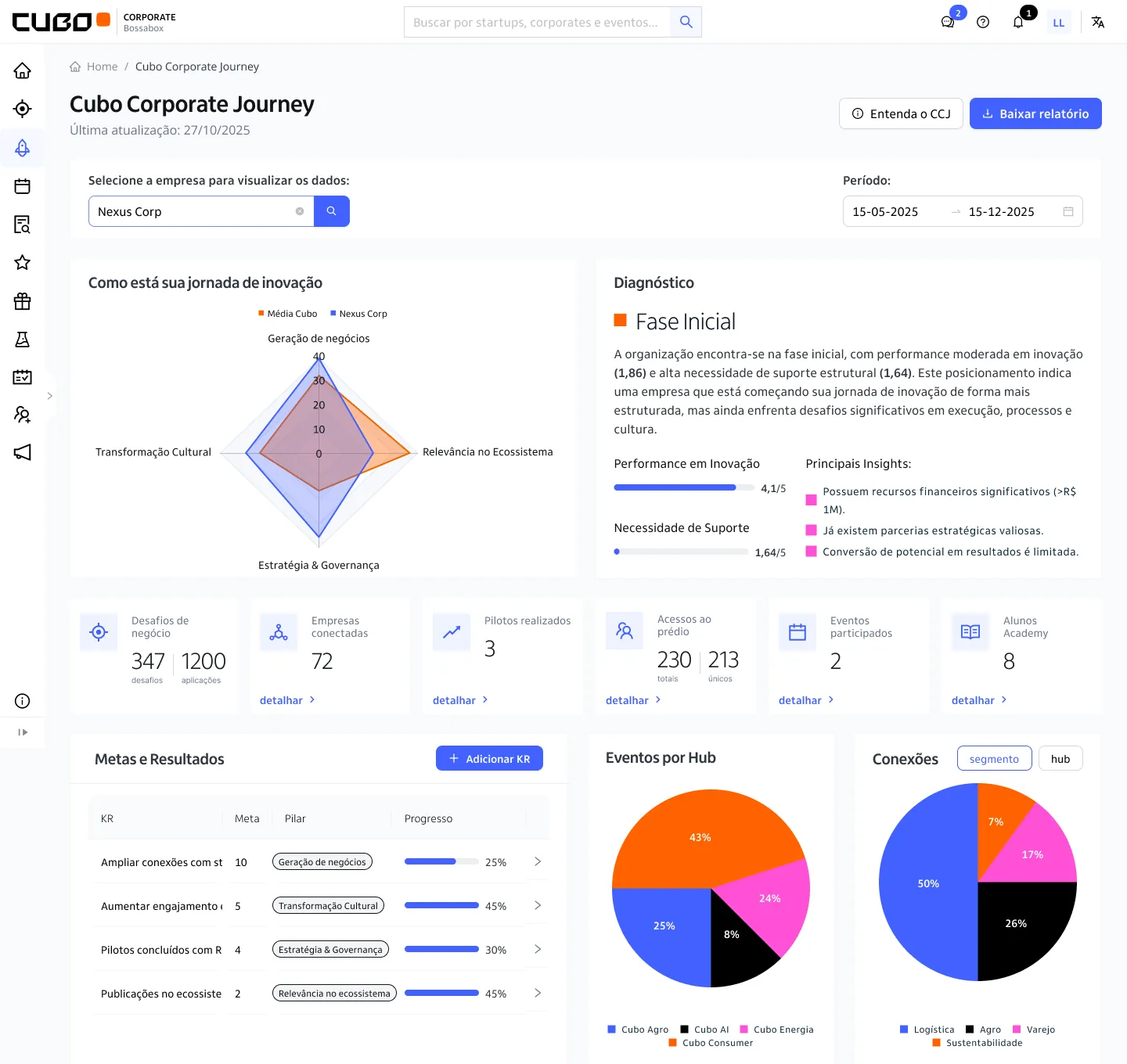
Cubo Corporate Journey page with innovation radar, diagnosis, key numbers, goals and charts
Cubo Corporate Journey: each company's innovation journey on one page, compared with the Cubo average.
The problem

Cubo wanted to offer member companies an innovation management feature. The first attempt, an innovation funnel, got no traction.

How I worked

I investigated why the funnel failed. The same research revealed a different need, and from it came the Cubo Corporate Journey, validated in use and later taken into the app and Cubo AI.

Before → after
Before: a funnel nobody used, and a table report requested from the Cubo team every month.After: the full innovation journey on one live page, and the same logic in the app and an AI assistant.
  1. Round 1Oct 2025 · why the funnel failed
  2. PrototypeCubo Corporate Journey
  3. Round 2Apr–May 2026 · in-use evaluation
  4. RevisionJul 2026 · Cubo 360 workshop
  5. Digital innovationApp journeys and Cubo AI
01 · The problem

A feature nobody used

Cubo Itaú connects large companies with startups. Events, business challenges and connections generate data no other platform has. The plan was to offer member companies an innovation management feature inside Cubo, and the first attempt, shaped as an innovation funnel, got no traction.

My starting point: before redesigning the funnel, understand why it had not worked.

I keep everything under control: how many people joined events, how many visited Cubo, room bookings, all in the spreadsheet.

Innovation lead at a mining company, round 1

02 · Round 1 · Oct 2025

Why the funnel failed, and what they actually needed

I interviewed innovation leads at five companies, in automotive, food, mining, energy and agribusiness, to understand how they manage open innovation and why Cubo's funnel had not caught on. Of five hypotheses, four were validated and one partly.

I mapped the companies by maturity, and the picture was clear: mature companies already have a tool; less mature ones live in spreadsheets.

AutomotiveHigh
FoodHigh
EnergyMedium-high
AgribusinessLow-medium
MiningLow, evolving

The reason showed up quickly. Most companies already had a robust tool of their own to manage the funnel, would not swap it for Cubo's, and saw no value in keeping two. But the same conversations showed something else: what they wanted was to see their own innovation through data only Cubo has, such as events, challenges, connections and visits.

What was asked for

An innovation management funnel inside Cubo.

What they needed

A 360º view of their innovation, built on internal data only Cubo has.

The signal was in their routine: every month, member companies asked the Cubo team for a table report with these numbers.

Companies already have a place to innovate. What they lack is a Cubo that centralizes, connects and turns this data into value.

Decision 1

Replace the funnel with a 360º view built on Cubo data

Evidence
Mature companies already use robust tools of their own and would not switch. Less mature ones need visibility, not another system. And all of them asked every month for a report only Cubo could put together.
What I ruled out
Redesigning the funnel to compete with the tools they already use.
Trade-off
Cubo stops trying to be the management system and becomes the layer of visibility and value for the relationship.

The recommendation became four fronts: 360º dashboards (interactions, connections, ROI, events), a standardized startup base, simple integrations and AI to fill in profiles and improve search and matching. That last seed would come back later, in Cubo AI.
03 · Prototype

One page that answers "how is our journey going?"

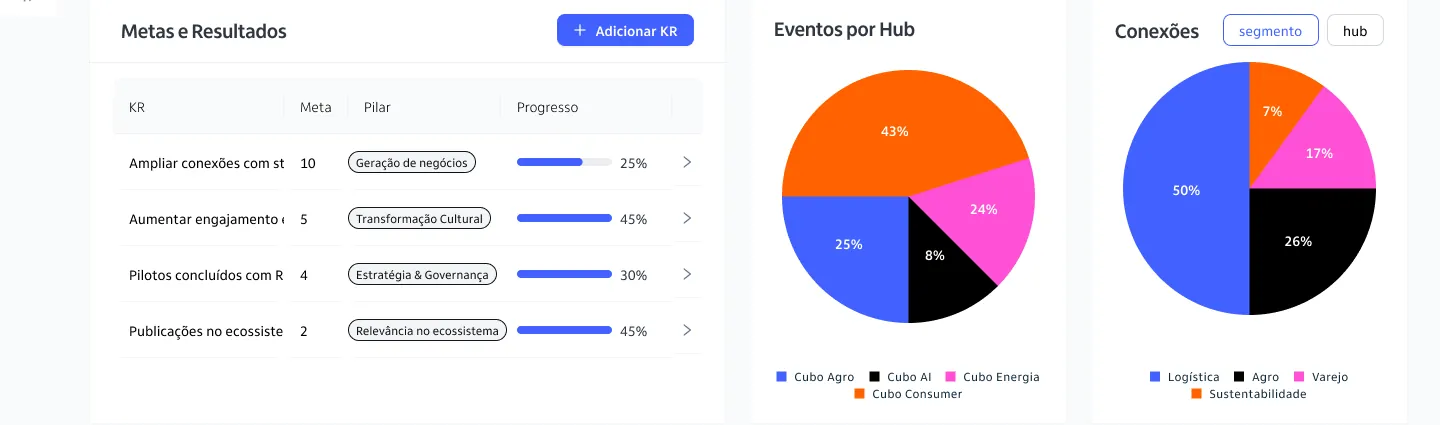
From that different need came the Cubo Corporate Journey: the company's full innovation journey at Cubo, in one place, replacing the monthly table report and the PowerPoint. It holds an innovation radar against the Cubo average, a diagnosis, key numbers of the relationship, goals and KRs set with the Community Leader, events by hub and connections. All on one page, updated in real time.

Cubo Corporate Journey · Goals and results
Goals and KRs, events by hub and connections by segment in the CCJ
04 · Round 2 · Apr–May 2026

Does the CCJ deliver value, or is it just another dashboard?

With the product in use, I went back to the field with two companies at opposite maturity levels: a power user whose innovation lead spends 80% of the day at Cubo, and a team still structuring its funnel. The sample was small, and the report says so. The contrast became the reading tool: where both agree is strong, and where they diverge shows how needs change with maturity.

"When you say 'CCJ', I click, I get a page, I see the KRs and the key numbers behind it. It is much more tangible."

Company A · power user

"Two connections that created value are worth far more than 40 connections that went nowhere."

Company B · still structuring
  • The core delivery worked. Leaving PowerPoint was a leap in value, and the journey became tangible for newcomers.
  • Value is in going from the number to the action. Both want to click a key number and reach the people who applied to a challenge.
  • Follow-up after a connection was unsolved. Both asked for relationship status and history.

Three of five hypotheses were validated, and the findings became ten recommendations ranked by value and effort. In the Cubo 360 workshop, the top one made it into the product: the connections table gained interactions, cross validations and a relationship status, from first contact to active pilot.

05 · Digital innovation · app

Putting the journey in people's pockets, one tap from action

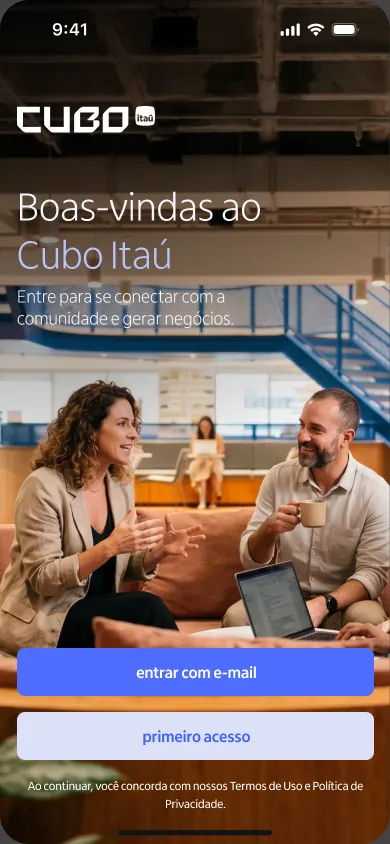
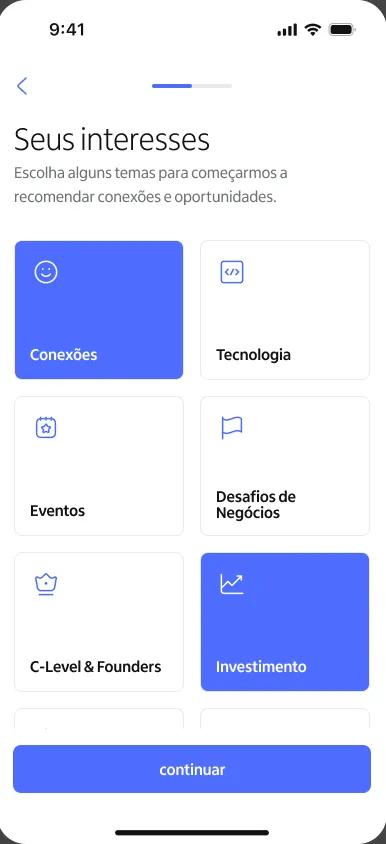
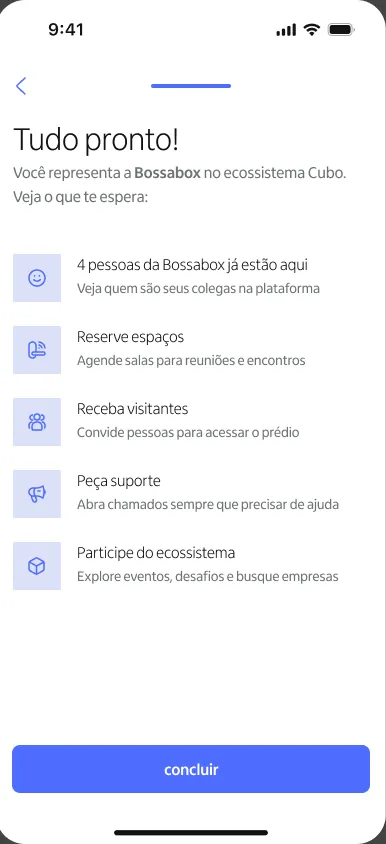
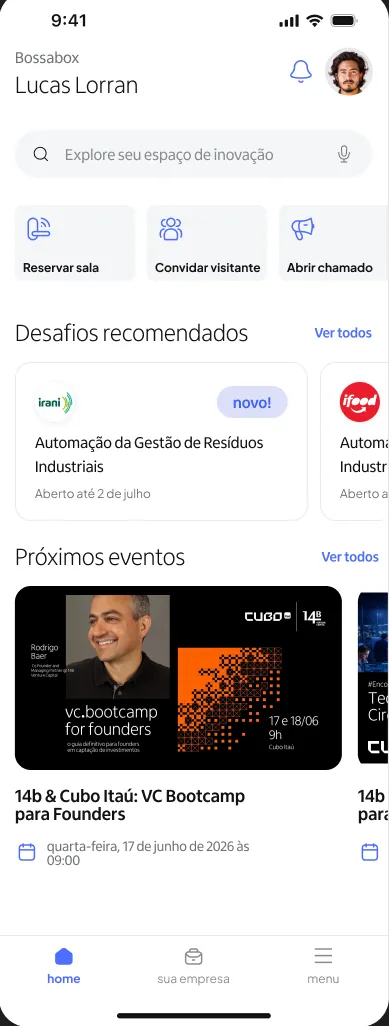
Both rounds pointed the same way: value is in reaching what matters, fast. In the app, onboarding asks about the person's interests and uses the answers to recommend challenges, startups and events, as the first round had recommended. The most frequent building actions, booking a room, inviting a visitor and opening a ticket, sit at the top of the home screen.

Welcome
Welcome
Personalization
Personalization
Interests
Interests
All set
All set
Home
Home
Cubo app onboarding and home. Screens in Portuguese.
06 · Digital innovation · Cubo AI

Cubi, the assistant that solves instead of explains

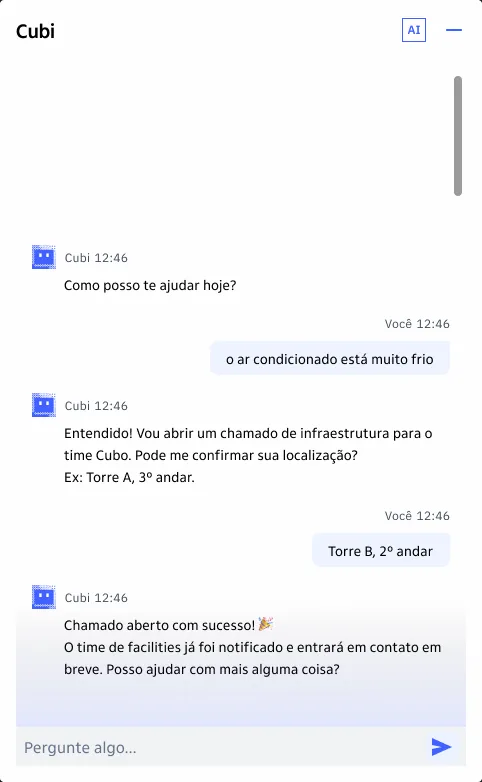
The first round had already pointed to AI as a way to cut manual effort and improve search. Cubi is the platform's assistant: it answers questions, helps people explore the ecosystem and opens tickets for the Cubo team, with no form to fill in. When someone writes "the air conditioning is too cold", it recognizes an infrastructure ticket, asks for the location and confirms the facilities team has been notified.

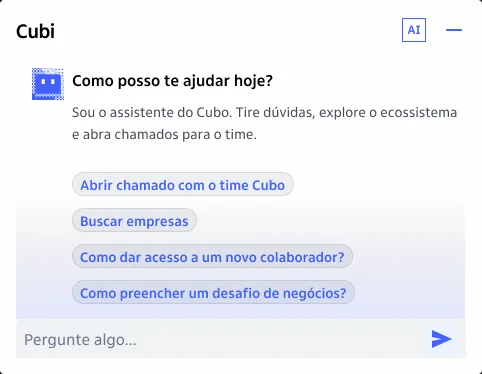
Cubi offering shortcuts to the most common questions
Conversation where Cubi opens an infrastructure ticket
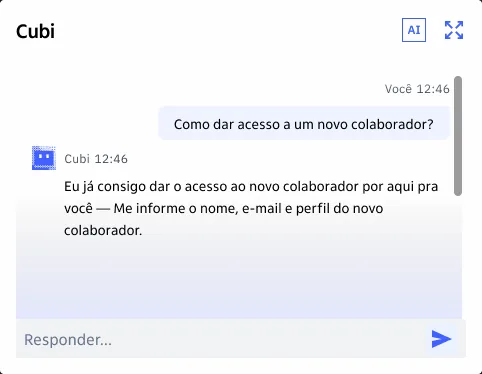
Cubi explaining how to give a new colleague access

Assistant screens in Portuguese.

07 · Results and metrics

One thread, from research to product

Before

Innovation in spreadsheets and PowerPoint, with Cubo outside decision makers' routine.

After

The journey visible in the CCJ, validated in use, and the same logic in the app and an AI assistant.

Main metric: weekly adoption of the new feature across member companies.
86%of member companies use the new feature every week
4 of 5hypotheses validated in discovery
3 of 5hypotheses validated in use

The top recommendation, relationship status on connections, shipped after the Cubo 360 workshop. In August 2026, the CCJ's data and learnings also fed the redesign of the new Corporate Home.

08 · Learnings

What I took away, and what I would do differently

  • Sometimes the best recommendation is to build less. Not competing with the companies' own tools is what made the CCJ fit their routine.
  • A small sample calls for an honest read. Contrasting maturity levels got more out of two interviews than similar profiles would have.
  • Good research becomes product on more than one front. The same evidence guided the dashboard, the app and the assistant.

What I would do differently: pair the interviews with usage data from the start and widen the sample before higher-risk roadmap decisions.